 500+ Google Reviews
 Fast + Free Delivery - orders over $250
INFORMATION & TIPS - FAN FAQ
Our Information and Fan Tips FAQ explains the essentials of fan performance, installation considerations, and everyday use, backed by the real-world advice our team has shared since 1988.*
CEILING FAN INFORMATION
Do ceiling fans cool a room?
Do ceiling fans cool a room?
Ceiling Fans don’t actually reduce the temperature of your room. They circulate air evenly through a room, helping hot or cold air distribute more effectively and creating what’s called a ‘wind-chill effect’ from their airflow. The temperature regulation from the Fan’s airflow is often enough to make your space feel comfortable and forgo running your air conditioner as often or as strongly.
What is Wind-Chill?
The ‘Wind-chill’ effect is created as the airflow moves across your skin. This air movement carries the heat and moisture buildup from your skin away, helping you feel cooler and fresher.
What Size Fan Do I Need?
 explore small fans
 Explore Medium Fans
 explore large fans

What size ceiling fan do I need?
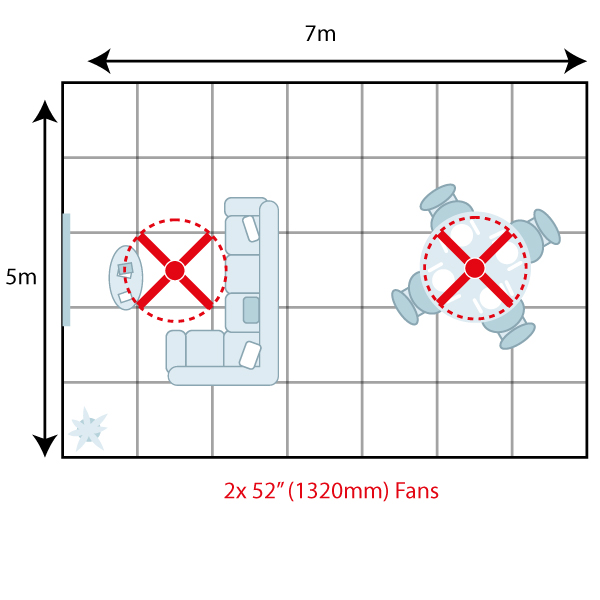
Fan size depends on the room dimensions and where you spend time within that space. Because fans circulate air directly beneath the blades, it’s best to install the fan above the room’s focus. Eg, over the bed in a bedroom, over the couch in a living room, or over the dining table in an outdoor patio.
Most Australian bedrooms and medium living rooms suit 48–56 inch fans. Larger open-plan spaces may require 60 inches or more, or in some cases multiple fans, like the example below which features two fans, one over each area of interest.
Small, Medium or Large fans?
SMALL FANS
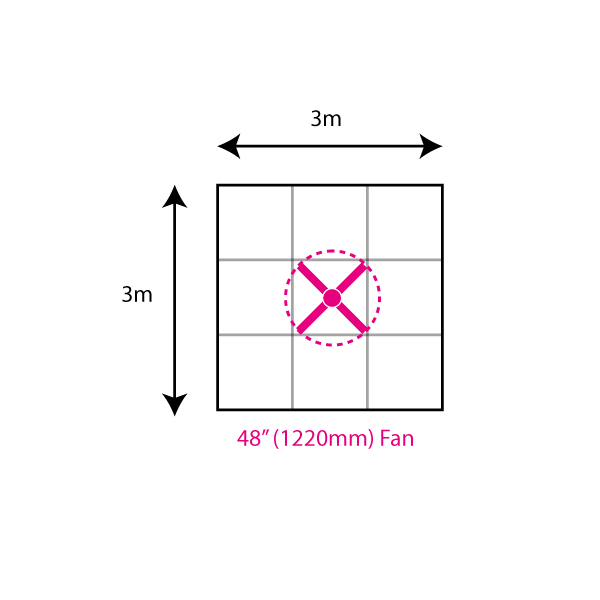
Fans under 48″, ideal for spaces under 3x3m, like small bedrooms or studies.
MEDIUM FANS
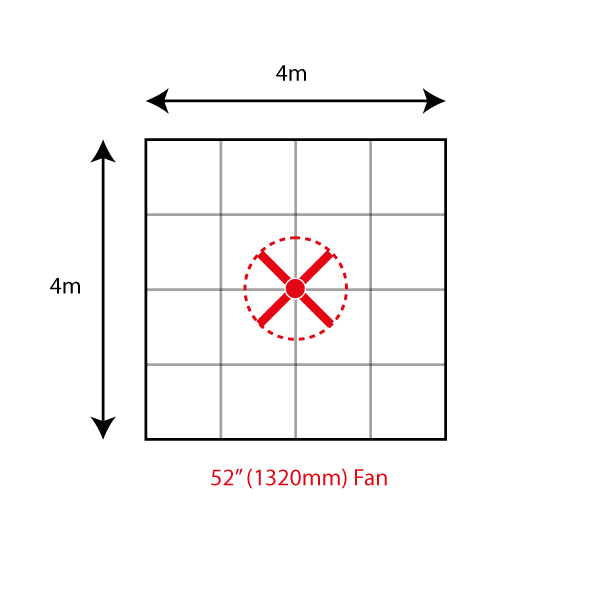
Usually fans between 48″-56″. Work great in most common sized rooms like bedrooms, offices, or kids spaces.
LARGE FANS
Large open spaces, like open-plan living areas or outdoor entertainment spaces may require a larger fan, usually above 56″.
You can use our Ceiling fan selector to help you find the perfect fan for your space:
Use our Ceiling Fan Selector
What does airflow (m³/h) mean and how much do I need?
What does airflow (m³/h) mean and how much do I need?
Airflow is the volume of air a fan moves each hour (m³/h, or cubic meters of air moved by the fan over one hour).
The volume of airflow you will need is determined by your space and what its requirements are. Eg:
- Bedrooms typically need gentler airflow to avoid disrupting sleep.
- Livingroom or Open plan spaces may need fans with higher airflow.
- Outdoor Spaces benefit from stronger airflow due to outdoor conditions like wind or weather.
Higher airflow doesn’t always feel better can be distracting, uncomfortable and even noisy. It’s better to choose a fan that suits how you will use your space rather than going for the most powerful.
What influences a fan’s airflow?
The biggest thing that will influence the generation of airflow is the fan motor. The more powerful the motor, the higher RPM it can maintain, and the higher the airflow.
The other main factors that influence airflow are, blade pitch and blade size. Blade count has very little influence on airflow.
How important is blade pitch?
Blade pitch is very key factor in airflow generation. Generally, a higher blade pitch leads to an increase in airflow. However, the higher the blade pitch, the more drag the blades create as they spin, and the harder the motor needs to work to maintain RPM. Excessive blade pitch on a weak motor can create noise, instability or poor efficiency.
A well-engineered fan balances motor performance, blade pitch for smooth, quiet airflow.
Does blade size affect airflow?
Does blade size affect airflow?
Yes, fan blade size determines how wide of an area the fan’s airflow will reach. The larger a fan’s blades, the wider the area it will affect. Smaller blades produce more direct, concentrated airflow, whereas larger fans are better for larger more open areas.
Motor output and RPM are more important factors that determine how much airflow your fan will create. A good way to think of it is:
- Blade size effects how wide the airflow will reach.
- The motor will determine the strength of that airflow.
Which Is Better – 3/4/5 blade fans?
How many blades is best — 3, 4 or 5?
There is no “best” blade number. Modern fans are engineered so airflow comes from motor strength, blade pitch and aerodynamics. Blade count has little to no impact on airflow, and is only a relevant airflow consideration if you are after industrial size large, low RPM fans.
Blade count influences appearance more than performance. It’s always better to choose your fan based on what your space needs, its size, and style more than by the number of blades.
What blade material is best?
For indoor fans, the material of your blades is not much of a performance concern, and you can choose a fan that matches your room’s style and aesthetics.
However, for outdoor fans, their material and how well it can withstand moisture or corrosion is a very important consideration. You can learn more about that in our Outdoor Fan Guide.
What’s the difference between AC/DC ceiling fans?
What’s the difference between AC/DC ceiling fans?
The motor powering your ceiling fan will either use an alternating current (AC) or a direct current (DC). Both connect to Australian home wiring:
- AC motors use alternating current straight from the wall. They are reliable, affordable and work well for everyday use.
- DC motors use magnets to convert AC to DC internally, which powers the motor. They offer quieter operation, lower running costs, more speed settings and greater energy efficiency.
We have a more in-depth exploration of AC and DC fans here:
AC vs DC, which Ceiling Fan is best?
Are Ceiling Fans Energy Efficient?
Are ceiling fans energy efficient?
Ceiling fans are extremely energy efficient. Most use less than 120 watts on their highest speeds – the equivalent of 2 incandescent light globes. DC fans can run as low as 1–5 watts on low. This translates to miniscule electricity costs, even if the fan is left running continuously for months at a time.
browse DC ceiling fans
What Is A Summer/Winter Reverse Function?
What is winter/Reverse mode?
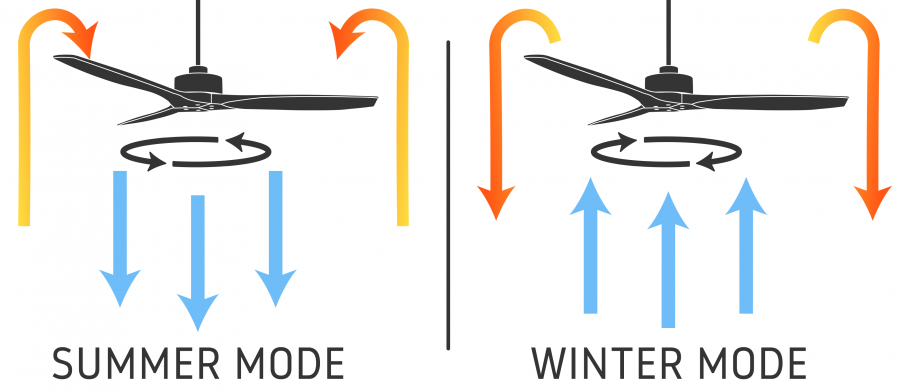
Fans typically operate in something called ‘Summer mode’, where the breeze they circulate is pushed straight down to the room below. Most ceiling fans will also have a ‘Winter mode’ (or Reverse mode) which reverses the direction the fan spins, usually going from anti-clockwise (summer mode) to clockwise (winter mode).
towards the habitable zone, reducing the amount of heat needed and keeping the warmer air accessible for longer.
Reverse can be controlled via a switch on the motor or through a remote/wall control depending on the model.
See more here:
Which direction should a ceiling fan spin in summer?
What Makes A Fan Effective?
What makes a fan effective?
The separation between an effective, quality fan and an inefficient one comes down to how good the fan is at its job of creating airflow, and how long it will last doing that job before it starts to decline.
We work with established and trusted manufacturers and have been selling their products over many decades with minimal issues. These specialist manufacturers fans can be trusted to have longer product lifecycles, and are typically quieter and produce better airflow (especially those with DC motors) than many of the retail options available from places like big box retailers.
These cheaper fans are generally not designed with a lifecycle like this in mind, and tend to be noisier, use more electricity, and produce choppier, weaker airflow.
See our list of ceiling fan brands
How do I control my fan?
How do I control my fan?
Fans generally come with one or two of the control options below:
- Wall controls are reliable, hard-wired and ideal for bedrooms. Typically standard for AC fans.
- Remotes give convenience, perfect for large rooms or when switches are hard to reach. Typically standard for DC Fans.
- SMART controls allow app control, voice commands and timers. Some DC fans have this as an extra.
- Pull Cord a very old-school way of controlling a fan that is rare to find these days.
We have a more in-depth breakdown of fan remotes, here:
learn more about ceiling fan remotes
Should I get a ceiling fan with a light?
Should I get a ceiling fan with a light?
A fan with a light is a practical choice when you need both airflow and illumination from a single mounting point, especially in bedrooms and apartments where space is limited.
Most modern fans offer a version with:
- Integrated LED panel (efficient, bright, long-lasting)
- E27/B22 globe fittings (easy to replace)
Choosing a fan with an integrated light can simplify your layout, reduce the need for additional wiring and provide a cleaner look in bedrooms, living rooms or apartments.
Are ceiling fan lights bright enough?
Your needed level of brightness will change depending on where your fan is installed and how it’s light will impact your space. You can get a gauge of how bright a fan light will be by looking at its listed Lumen output, which will be included on the products listing. Most modern fan lights use energy-efficient LED’s which provide strong, even illumination suitable for everyday use in living spaces, bedrooms and smaller rooms.
Are LED panels or globe fittings better?
In the past, LED lights couldn’t be removed from the fan, so if there was an issue with the light panel then the whole fan needed to be replaced. However, as LED technology has improved issues like this have been resolved and LED lights have overtaken globe fittings as industry standard.
Ultimately, the choice between LED or globes comes down to preference. LED panels produce even consistent light that does not feature the shadow of the diffuser that many globe lights do. They also feature many dimmable brightness options, and are significantly more energy efficient to use than globes are.
E27 or B22 globe fittings are more traditional and tend to produce softer more ambient and textured glow than LED’s do. They better integrate with existing hardwired light dimmers (if it’s an AC fan) and because Globe fittings also allow for traditional smart lights bulbs, if you have an intricate RGB smart light system that includes your fan, then a bulb fitting would be the best option.
Do LED fan lights last a long time?
LED panels typically last 10,000–50,000 hours depending on quality and use. Heat, moisture and poor electrical connections can reduce lifespan.
Fans with replaceable LED modules or globe fittings offer easier long-term maintenance, however LED lights often have CCT Technology allowing you to change the colour temperature of the fan’s light.
[See our LED Colour temperature guide here]
Can fan lights be dimmed?
Many ceiling fan lights are dimmable, although dimming performance depends on the model, so it is worth checking the specifications to confirm compatibility. Not all LED lights are dimmable.
Are ceiling fans safe for outdoor areas?
Are ceiling fans safe for outdoor areas?
Yes, outdoor-rated fans are designed for undercover areas like verandas and alfresco spaces. They use materials that tolerate humidity and temperature changes and are more suited to the fluctuations of outdoor conditions.
Always choose a model with the correct IP rating for your installation location.
See more in our outdoor fan guide
What’s the difference between outdoor and coastal-rated fans?
What’s the difference between outdoor and coastal-rated fans?
Outdoor fans suit moisture but may still corrode near the ocean. Coastal-rated fans are designed specifically to withstand salt exposure using materials like:
- ABS plastic
- UV and salt-resistant coatings
- Marine-grade metals
These options are essential for homes near the coastline.
See our range of Coastal Fans
What is the correct ceiling height for a ceiling fan?
What is the correct ceiling height for a ceiling fan?
The Australian Standard (AS 4226 – 2008, Clause 12.5.3) states a ceiling fan blade should be at least 2.1 metres above the floor. This height will work well for most residential spaces, however if you have unique requirments (For example, if you are on the taller side, have larger furniture items like bunk beds under the fan, or have a room that has a tall or short ceiling) then you might prefer to install the fan slightly higher.
In general, we suggest installing the fan so that the blade sits between 2.1 and 2.4 metres above the ground for the best performance.
Can I install a ceiling fan on low ceilings?
Can I install a ceiling fan on low ceilings?
The Australian Standard (AS 4226 – 2008, Clause 12.5.3) states that all ceiling fans should be at least 2.1 metres from the floor. If your home has low ceilings then you will need to choose a low-profile (hugger) ceiling fan. These sit close to the ceiling while still meeting the 2.1 metre clearance requirement.
Explore Low Profile Fans
Can I install a ceiling fan on high ceilings?
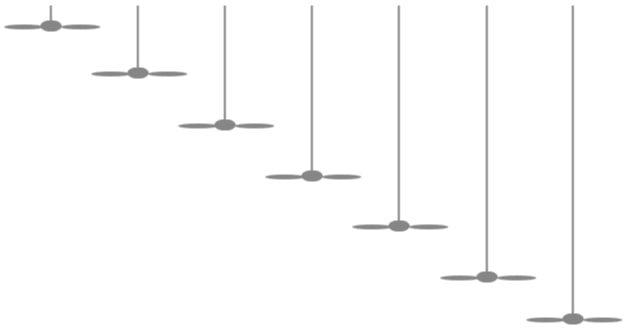
Can I install a ceiling fan on high ceilings?
Yes. Extension rod’s allow you to lower the fan to the optimal height for high ceilings.
They are sold as accessories for most fans and come in multiple lengths ready to be cut to size by your electrician.
You can learn more about Extension rods in our Extension Rod Guide.
Learn more about extension rods
Do I need an extension rod?
Do I need an extension rod?
You may need one if:
- Your ceiling is higher than 2.7 metres
- You want stronger airflow at occupant height
- You have a raked ceiling and need extra blade clearance
Check the fan’s “ceiling to blade drop” and compare it to your ceiling height.
Can I Use A Ceiling Fan On A Sloping Ceiling?
Can I install a ceiling fan on a sloping or raked ceiling?
Most fans use a ball-joint canopy that allows installation on angled ceilings. You must check:
- The fan’s maximum allowable ceiling angle
- That the blades have enough clearance to rotate safely
Some installations may require an extension rod.
Calculate your ceiling angle
How do I calculate my ceiling angle?
How do I calculate my ceiling angle?
Measure the vertical rise over a set horizontal distance, then calculate the angle using basic trigonometry – or use our quick online calculator.
Calculate your ceiling angle
Can ceiling fans be installed in apartments or units?
Yes — most apartments can accommodate ceiling fans, provided:
- There is appropriate structural fixing
- The electrical circuit can support the installation
- The ceiling cavity allows safe wiring
Low-profile fans are ideal for spaces with slab ceilings.
Explore Low Profile Fans
Can I install a ceiling fan myself?
Can I install a ceiling fan myself?
In Australia, ceiling fans must be installed by a licensed electrician. Incorrect installation can compromise safety, cause noise or vibration, or damage wiring. A professional ensures compliance with building standards.
Explore Low Profile Fans
How do I clean and maintain a ceiling fan?
How do I clean and maintain a ceiling fan?
Regular maintenance improves performance:
- Dust the blades to prevent imbalance
- Wipe surfaces with a damp cloth (avoid harsh cleaners)
- Check for wear, corrosion (outdoor/coastal), or loose screws
- Ensure LED lighting modules remain cool and unobstructed
EXHAUST FAN INFORMATION

Why do I need an exhaust fan?
Apart from local building regulations, it is important to ventilate well so as to avoid future humidity damage to your home or building. Ventilation is also important in toilets to dissipate odors produced.
How do I choose an exhaust fan
Choosing the right exhaust fan depends on what you’re trying to achieve. Some areas of the home need to have the air extracted at a higher rate than others. For example, in a bathroom with a shower, we suggest a fast extraction rate between 15-25 air changes an hour. By contrast, you don’t need something as powerful if you’re trying to improve the air circulation in your home office. Because you will have different priorities in different spaces, you will likely need different types of fans in different spaces. You should also consider the size of the room, and the available space in your ceiling or wall cavity before making a choice.
View our exhaust fan guide
Can I install an exhaust fan over my shower?
It’s possible to ensure an exhaust fan over your shower area, provided that you ensure that the installation complies with all the relevant building and electrical codes. But directly over the shower is not necessarily the best place to for your exhaust fan. Installing the fan 1-2 metres from the showerhead and away from the door will allow more cross flow and air circulation.
What Is The Difference Between Axial, Mixed Flow and Centrifugal Exhaust Fan Motors?
These are all Inline exhaust motors. The Axial inline exhaust fan has a single propeller and is good at moving larger amounts of air at low pressure. It is important to keep restrictions to the air flow at a minimum by only having short lengths of duct, as few bends as possible etc.
Centrifugal inline fans move good volumes of air against high pressure. This means they can be used for longer runs of duct, branches, bends, etc. For all models, please refer to the relevant pressure curves and technical specifications of each fan for more detailed information.
Mixed Flow inline fans are a mixture between the Axial and Centrifugal models. They have good airflow and good pressure characteristics, can be used for longer runs of duct, bends etc. They show centrifugal fan characteristics from a size of 150mm upwards and axial fan characteristics for sizes smaller than 150 mm.
How much ducting can I add to my fan?
Over a short length of ducting, most exhaust fans will perform reasonably well. Depending on the type of exhaust fan you’re using, you can expect its performance to drop off over the length of a duct run. If you know that you need to duct your fan more than 1-2 metres, it is essential to check how much pressure you will lose over the duct length. This information is not always easy to access, so make sure you ask our staff for help if you are having trouble. We may suggest that you choose an inline fan that can still achieve a high extraction rate over a longer duct run.
Regardless of how far you duct your fan, the ducting needs to be as tight and straight as possible – every bend you add in the duct run is equivalent to adding one extra metre of ducting.
Do I Have To Duct The Fan Out?
While you can exhaust directly into your roof space, you need to consider the effect on the building. Extracting air directly from a bathroom into a roof space may create a build up of moisture in the roof cavity, unless the roof space is sufficiently ventilated. If you’re not able to duct the exhaust to the outside of the building envelope, check that you have enough passive vents to allow air to flow out of the building.
Can I Have The Fan & Light On At The Same Time?
Yes, this can be arranged with your electrician. The fan can be hardwired to the light switch so it will turn on at the same time as the light.
Can I Get An Exhaust Fan With Remote Control?
We have a range of exhaust fan models that can be remote controlled, most of which are 3 in 1 fan, heat and light units. >> View Our Exhaust Fan Guide
HEAT TRANSFER INFORMATION
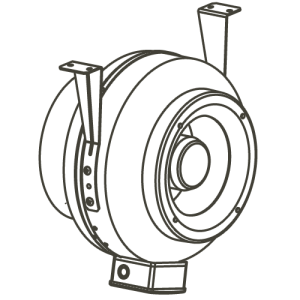
What is heat transfer?
Heat transfer systems are for homes without centralised heating. Installing an inline exhaust fan in the ceiling to draw air from the room with the heater into 2-3 additional rooms can be a very cost-effective solution to circulate warm air around your home in winter. Unheated bedrooms can benefit from the heater in the living area.
What Are The Benefits Of A Heat Transfer System?
An air or heat transfer system is an energy efficient and economical way to distribute air from one room to another (or many others). They have a low running cost and provide a significant temperature increase in destination room(s) by utilising the excess heat at ceiling level in the room with the heat source.
What do you need to set up a Heat transfer system?
To set up a heat transfer system, you will need an inline fan powerful enough to push air as far as you need it to go, insulated ducting, an intake vent and an outlet vent for each destination room. If you want to heat two or more additional rooms, you will also need a y junction or “splitter”.
Depending on the type of fan you choose, you can also add a thermostat or a speed controller to your system.
To make it easier for you, we have kits with everything you need to get started. Each kit listing includes links to suitable accessories like controls.
Which exhaust fan do I need for my heat transfer system?
The best fan for your heat transfer system depends on the number of rooms you wish to distribute air to, their distance from the heat source, and your family’s noise sensitivity.
We put together our heat transfer kits with this in mind. The 1-2 room kits include fans powerful enough to draw air from 1 room to the two secondary rooms, and the fans in the 1-3 room kits can draw air to three additional rooms.
Can I build my own heat transfer kit, or add extra components to the kits available on the Universal Fans website?
Choosing a heat transfer kit from our range is an easy way to make sure you have everything you need to move heated air from one room to another. If you want something slightly different to existing kits available through our store, we also sell the components separately. There are also accessories available for each kit, including controllers and thermostats. You can find compatible accessories for your kit at the bottom of the listing.
SUB FLOOR INFORMATION
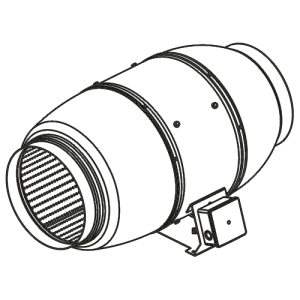
Why Do I Need Subfloor Ventilation?
Inadequate ventilation under your home can lead to moisture and dampness in the home, a musty smell or a home susceptible to mould. These symptoms are all possible signs of problems with your underfloor ventilation. Subfloor ventilation kits provide an effective solution for ineffective air movement under your house. Protect your home and your family’s health by making sure you have adequate subfloor ventilation.
Which Subfloor Ventilation Products Do I Need?
We have all the parts necessary to ventilate your subfloor. We have ready to go DIY “kits” available for typical applications, however speak to one of our sales consultants and they will assist you in the right kit to purchase for your application otherwise they will help create one specifically for your situation.
How do I choose an exhaust fan for my subfloor system?
Before you choose an exhaust fan for your subfloor system, you need to calculate the size of the space in cubic metres. This calculation is pretty easy to do. First, multiply the length by the width by the height of the subfloor area. Then, multiply your answer by the number of air changes you wish to achieve. We suggest aiming for at least five air changes per hour to ensure adequate ventilation in a subfloor area. If you have a subfloor space with a volume of 12m3 and you want to achieve five air changes per hour, then you need to multiply 12 x5. The answer to this is the volume of air you want to extract from the floor space in 1 hour. In this scenario, your exhaust fan needs to move 60m3/hr. To find an exhaust fan that can achieve this, just check the capacity on the listings on our site.
We also sell kits based on subfloor size. So if you do not feel confident about finding a fan with the capacity you need, you can look for a subfloor kit to suit your area.
How long do I need to run the fan in my subfloor system?
Running your subfloor fan for as little as 4 hours per day should be enough to ventilate the area underneath your home. We suggest running the fan during the day when the air is dryer and warmer because these conditions allow for faster air changes. You are also more active in the day, so you will be less likely to notice the sound! Keep in mind though, you may need to run the fan for a longer period if anything is exacerbating the problem. If there’s a build up of water under the house, you will need to dry it out and address the cause (fix broken pipes or improve drainage) before you can expect the air quality to improve.
Do I need to draw air out of the subfloor or push fresh air in?
We suggest exhausting air out of a space rather than drawing it in. Extracting air out gives you more control over where the stale air goes – it leaves the building envelope. When you draw fresh air into the building, you have less control over how musty air leaves the subfloor. You may find that drawing fresh air into the subfloor pushes stale air up through floorboards or gaps in the building frame. Extracting air with an exhaust fan draws the unwanted air out of the building and away from your family.
Who can install a subfloor ventilation system?
The subfloor kits available through our website come with a lead and plug, which means they are suitable for DIY installation. As long as you have some basic DIY skills and a power point available, installing the system should be relatively easy. If you don’t have a power outlet available for under the house, then you will need an electrician to install one, but you can complete the rest of the job yourself if you want to. Of course, some of our customers choose to hire someone for this type of work. Whether or not you decide to do the job yourself or pay someone else to do it, our kits still provide a low-cost subfloor solution.
How much does it cost to run a subfloor system?
Like running any electrical appliance, the cost of running a subfloor fan depends on its wattage, the price of electricity in your area and the number of hours you run it. The inline fans in our subfloor kits have motors with wattages between 73 and 193 watts, so they can be very cheap to run. If you a re ventilating a bigger space and need a more powerful fan, you can still keep your costs down by making sure that you only run the fan for as long as you need to. In most cases, the fan will only need to run for a few hours each day.
How noisy is a subfloor system?
Subfloor kits use inline fans that move high volumes of air over a long duct length. Their motors need to be reasonably powerful to achieve this aim, so they do make some noise. However, adding ducting to the fan insulates the sound so that it’s less noticeable. The floor of your home can have a similar effect. We also stock a range of fans with inbuilt insulation, which make less noise. To get an idea of how noisy your subfloor system will be, check the dBA rating on the individual fan. Customers visiting our showroom can also compare the sound of the exhaust fan with assistance from our friendly staff.
GENERAL INFORMATION
ABOUT UNIVERSAL FANS
Do you have other stores?
We sell directly to customers and provide advice Australia-wide by phone, email and chat.
If you’re in Melbourne, you can visit our showroom at 18 Cleeland Road, Oakleigh South.
Where to find us
Do You Install/Repair?
For any products which need to be hard wired, you will need a qualified electrician per Australian regulations. We have now partnered with a third party trade booking service to offer installation Australia wide.
Learn more about ceiling fan installation
Where Can I View Your Fans?
We encourage our customers to see our fans on display in our Oakleigh South showroom. Seeing a fan in person will give you a better sense of how it works, sounds and feels. When you visit, our friendly staff will be happy to help you find a model to suit your needs, as well as demonstrate all of its great features.
Do you Offer a Consultancy Service?
For customers requiring assistance, we offer general product advice, we don’t offer a formal consultation service that involves reviewing detailed floor plans or providing professional assessments and tailored solutions. For comprehensive planning or detailed recommendations based on architectural drawings, we recommend engaging a qualified professional—such as a mechanical engineer or an on-site installer—who can properly assess your space and provide tailored advice
TRADE CUSTOMER INFORMATION
Where Do I Login As A Trade Customer?
Customers with an existing trade account on our website can access their orders and exclusive pricing using the link below. This link is also available from any page on our site, but clicking the login button in the top left-hand corner. If you don’t have a trade account, you can apply for one using the “Trade-Apply Now” button on the top right.
Where Can I See Trade Pricing?
Universal Fans customers are eligible for 10% off Fanco and 30% off full retail price on Claro ranges. You’ll also enjoy 5% off the rest of our catalogue. Once your trade account has been approved, you can view trade pricing by logging into your account.
Can I Purchase Online?
Universal Fans trade customers can place an online order with us by logging into their trade account.
What Methods Of Payment Do You Offer?
For orders directly over the website, we offer Bank Transfer and Paypal – which offers a secure credit card payment method (you don’t have to have a Paypal account to use this method).
What If I Need Bulk Quantities – Can You Do A Better Price?
Bulk pricing may be available depending on product and quantity. Contact the team with your requirements to discuss options.
About this Page:
This information is general in nature and provided as a guide only. Product suitability and installation requirements vary by home, location and existing electrical conditions.
All hard-wired fan and ventilation products must be installed by a licensed electrician in Australia, and you should always follow the manufacturer’s instructions and relevant standards. If you’d like advice for your specific space, Contact Our Team for support.